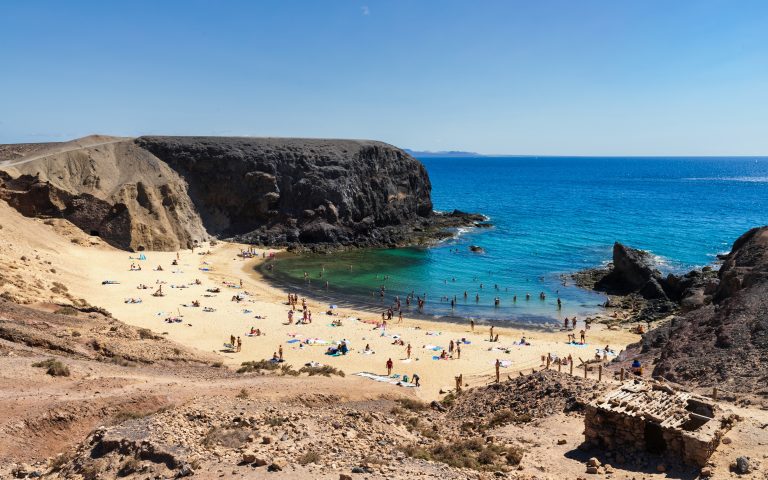
One fact changes everything about working remotely from the Canary Islands, and it is not the weather. The islands run on the same clock as the UK, all year round, daylight saving included. Your 9am stand-up is at 9am. Nowhere else with 21°C January afternoons can say that.
Add flights of just over four hours from a dozen UK airports, fibre broadband as standard, and a realistic all-in budget of €1,755–€2,575 (~£1,500–£2,200) a month, and it becomes obvious why Las Palmas and Tenerife fill up with laptops every winter. The catch sits in your passport rather than your bank account. Since Brexit, you get 90 days in any 180 across the Schengen area, and Spain’s digital nomad visa is the route past that limit if a single winter is not enough.
This guide covers where to base yourself, what internet and phone plans actually cost, how the 90/180 rule and the visa work for UK citizens in 2026, and how to keep your laptop safe on wifi you do not control. Figures were checked in July 2026.

Table of Contents
- Why the Canaries work so well for UK remote workers
- Where to base yourself
- Internet, SIMs and the phone-plan trap
- The 90/180 rule, and the visa that gets around it
- Working safely on wifi you do not own
- What a winter month actually costs
- Frequently asked questions
- Do I need a visa to spend a winter working from the Canary Islands?
- Is the internet reliable enough for video calls?
- Which island is best for a first stay?
- Can I just keep using my UK phone contract?
- Will I owe Spanish tax?
Why the Canaries work so well for UK remote workers
The time zone deserves spelling out, because it is the islands’ quiet superpower. Mainland Spain is an hour ahead of the UK; the Canaries are not. They observe Western European Time and switch to summer time on the same dates as Britain, so your calendar never lies to you and clients never notice you have left. Working from Lisbon offers the same trick, but Lisbon averages 15°C in January. The south of Tenerife and Gran Canaria manage 21–23°C, and December days give you around ten and a half hours of daylight against London’s eight.
Getting there is cheap and boringly reliable. Jet2, easyJet and Ryanair fly year-round from London, Manchester, Birmingham, Leeds, Bristol, Newcastle, Glasgow and more, with one-way winter fares from roughly €41–€82 (£35–£70) if you avoid school holidays. Flight time to Gran Canaria is about four and a quarter hours, Tenerife much the same. That makes a quick trip home for a wedding or a board meeting a same-day possibility rather than a logistics project.
The winter climate does the rest. If you want the detail on which months are reliably warm and where the cloud sits, our Tenerife weather guide breaks it down; the short version is that the south coasts of Tenerife and Gran Canaria are the driest, sunniest places in Europe between November and March.
Where to base yourself
Las Palmas de Gran Canaria is the capital of the scene, and it is not close. This is a proper Spanish city of 380,000 people with a three-kilometre urban beach, Las Canteras. Most remote workers cluster in the Guanarteme streets behind it. Where new arrivals once had a couple of shared desks to choose from, the coworking scene has since grown into genuine network spanning several neighborhoods, each with its own character. White Forest, Work in Cholas, Sky Coworking and Fico are the established names, day passes run €12–€20 (£10.25-£17), and monthly hot desks typically €100–€250 (£85.50-£214). Repeople runs coliving houses that bundle a room with workspace if you would rather solve accommodation and workspace in one booking. Alternatively, the old town of Vegueta is fifteen minutes away by bus and feels a world apart from the beach quarter.
Puerto de la Cruz and the Tenerife north suit people who want somewhere greener, cheaper and more Spanish. Puerto is a real town with a longstanding expat streak, coworking day passes around €15 (~£12.80), and co-livings scattered through the Orotava valley behind it. The trade-off is honest: the north catches more cloud in winter, and evenings need a jumper.
The Tenerife south splits in two. El Médano is the closest thing Tenerife has to a nomad town, windy, low-rise and full of kitesurfers who work between sessions. Costa Adeje and Los Cristianos are resort country, which cuts both ways. You pay a premium and share the pavement with holidaymakers, but you also get the sunniest winter statistics on the island, the best restaurant depth and Tenerife South airport twenty minutes away. Amarilla coliving, which closed its north property and now operates solely in the south, runs villa-based houses near Costa San Miguel if you want a ready-made community alongside your coworking desk.
Fuerteventura and the quieter islands reward a certain temperament. Corralejo in the north has a genuine surf-and-laptop community and the dunes of Corralejo Natural Park on its doorstep, while Costa Calma further south is windier and much quieter. Come for a focused month, not for networking.
Internet, SIMs and the phone-plan trap
Connectivity is a solved problem here, with one exception that catches British visitors specifically.
Fixed internet first. Spain has one of the highest fibre coverage rates in Europe and the Canaries share it; apartment listings routinely advertise 300–600 Mbps, and the dedicated coworking spaces run professional connections in the 100–500 Mbps range built for video calls. The one habit worth adopting: before committing to a monthly let, ask the host for a speed test screenshot from inside the flat. Thick Canarian walls do unkind things to a router two rooms away, and hosts who actually have fibre are never offended by the question.
Now the trap. Your UK SIM is a two-week solution, not a three-month one. On paper the position in 2026 looks manageable: O2 still includes EU roaming with a 25GB monthly cap, Three includes it on some tariffs with a 12GB cap, while EE and Vodafone charge around €2.35–€2.90 (£2–£2.50) a day. The problem is the fair-use small print. UK networks monitor where your phone spends its time, and once it lives on Spanish masts for more than roughly 60 days, expect a warning letter followed by surcharges or suspension of roaming. These clauses exist precisely to stop people doing a full winter abroad on a UK contract.
The fix costs less than the problem. A Spanish prepaid SIM from Movistar, Orange or Vodafone runs €10–€20 (£8.55–£17) a month with generous data, and there is a small comfort for the homesick: O2 and EE roam onto Movistar anyway, so the coverage map feels familiar. If you would rather not queue in a phone shop, a data eSIM does the same job from your sofa; Airalo sells Spain data from around €4.70 (£4) per gigabyte, activated by QR code, with your UK number staying live on the physical SIM for calls and texts.
The 90/180 rule, and the visa that gets around it
Since April 2026 the EU’s Entry/Exit System has been fully operational, which means your entries and exits are recorded biometrically rather than with an ink stamp. The old vagueness is gone; the system counts your days whether you do or not. UK citizens get 90 days in any rolling 180 across the whole Schengen area, Canaries included, with no paperwork needed. The GOV.UK entry requirements page for Spain is the authoritative reference and worth reading before a long stay.
What about actually working during those 90 days? Spain’s tourist rules were written long before laptops, and nobody is policing a visitor answering email by the pool. A full winter of remote work on tourist entries sits in a greyer zone, which is exactly the gap the digital nomad visa was created to close.
The visa itself, properly called the teletrabajo residence permit, is one of Europe’s more usable ones, and the 2026 numbers are concrete. You need provable remote income of at least €2,849 (£2,435) a month (200% of the Spanish minimum wage, so this figure rises most years), a relationship of at least three months with your employer or clients, no more than 20% of income from Spanish sources, and private health insurance at the point of application. UK applicants have one genuine advantage: HMRC issues the A1 social security certificate (form CA3822 for employees, CA3837 for the self-employed) that Spanish consulates ask for, which trips up applicants from many other countries.
The route matters as much as the requirements. Apply through the consulate in London and you receive a one-year visa. Apply from inside Spain, which you may do after arriving as a tourist, and you receive a three-year permit, renewable to five. Approved applicants can also opt into the Beckham tax regime, a flat 24% on employment income, though anything involving the words “tax residency” deserves an hour with a cross-border adviser before you commit. One planning note for the undecided: your UK GHIC covers state healthcare on ordinary short stays, but it does not satisfy the visa’s insurance requirement.
Working safely on wifi you do not own
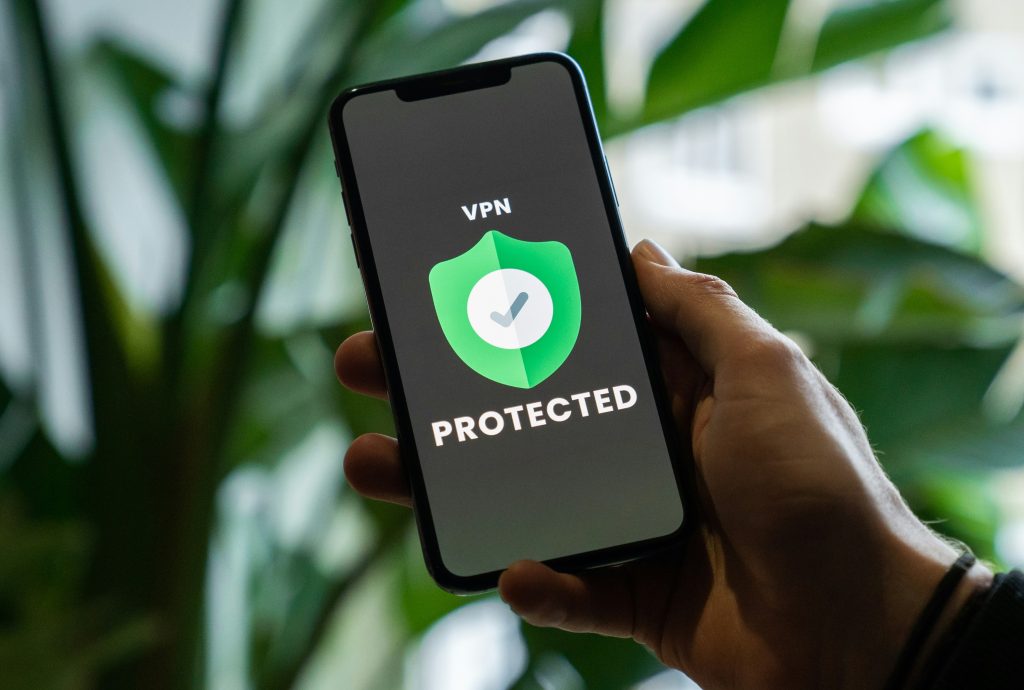
A winter here means months of working from networks you cannot vouch for. Café wifi, coliving wifi, airport wifi on the trips home. Most of it is fine. Some of it is not, and tourist areas are exactly where fake hotspots with plausible names get set up, because the people connecting are distracted and far from home. Mac users have lost their old immunity too; info-stealer malware written specifically for macOS has surged since 2023, spread through cracked apps, fake browser updates and poisoned search ads.
The habits that matter are unglamorous. Keep macOS and your browser updated the week patches land, not the month after. Turn off auto-join for open networks. Use your phone as a hotspot for anything sensitive when the venue wifi feels off, which is one more argument for the local SIM with a fat data allowance. And run a VPN on any network you do not control, so the person on the next table sees encrypted noise rather than your traffic. If you work on a Mac, one tidy option is Moonlock, MacPaw’s security app with built-in VPN, which rolls malware scanning and an encrypted connection into a single subscription rather than two separate apps. Whatever tools you pick, the principle is the same: assume shared networks are shared with strangers.
What a winter month actually costs
| Item | Typical range (per month) |
| One-bed winter let, Las Palmas (Guanarteme) | €900–€1,400 (£770–£1,200) |
| One-bed winter let, Puerto de la Cruz | €800–€1,200 (£685–£1,025) |
| One-bed winter let, El Médano | €950–€1,400 (£810–£1,200) |
| One-bed winter let, Costa Adeje | €1,200–€1,800 (£1,025–£1,540) |
| Coliving room including workspace | €800–€1,500 (£685–£1,280) |
| Coworking hot desk | €80–€250 (£68–£214) |
| Spanish SIM with data | €10–€20 (£8.55–£17) |
| Lunch menú del día | €12–€15 (£10.25–£12.80) per meal |
Ranges reflect mid-2026 pricing and the winter premium; January to March is peak season, so the good flats and coliving rooms for those months are booked by October. A careful solo budget lands around €1,700 (£1,455) a month in Puerto de la Cruz, a comfortable one around €2,500 (£2,140) in the Tenerife south, and Las Palmas sits in between. Against a London winter, most people come out ahead before counting the vitamin D.
Frequently asked questions
Do I need a visa to spend a winter working from the Canary Islands?
Not if you stay within 90 days in any 180-day period; UK citizens need no paperwork for that. Anything longer needs the digital nomad visa, and with the Entry/Exit System now recording your days biometrically, the limit is genuinely enforced.
Is the internet reliable enough for video calls?
Comfortably. Fibre is standard in towns, listings commonly advertise 300–600 Mbps, and coworking spaces run professional connections. The only real risk is a specific flat with a weak router, which is why you ask for a speed test before booking a month.
Which island is best for a first stay?
Las Palmas de Gran Canaria if you want community and city life, Puerto de la Cruz for a cheaper and greener version of the same idea, El Médano if your laptop shares bag space with a kite. Resort areas like Costa Adeje work better for shorter, sunnier stays than for a whole season.
Can I just keep using my UK phone contract?
For a fortnight, yes, especially on O2 or an inclusive Three tariff. For a season, no. Fair-use rules flag phones that live abroad for more than about 60 days, so plan on a €10–€20 (£8.55–£17) Spanish SIM or an eSIM from the start.
Will I owe Spanish tax?
A single winter almost never triggers it, because Spanish tax residency generally requires more than 183 days in Spain within a calendar year. Take the visa route or start stacking long stays, and that changes; at that point an hour with a cross-border tax adviser is the cheapest insurance you will buy.
Figures checked July 2026: visa thresholds from the 2026 Spanish minimum wage settlement, coworking and roaming prices from current published rates. Rules and prices move, so confirm the details that matter before you book, and treat the tax and visa notes as orientation rather than advice.